
Full-day Pre-K programs have increasingly become a popular choice among parents who wish for a structured educational environment for their young children. These programs are designed to provide children between the ages of three and four with comprehensive learning experiences. The full-day setup has numerous advantages compared to half-day programs, prompting more preschool centers to adopt this model. By enrolling in these programs, children can experience robust development in cognitive, social, and emotional areas.
Importantly, the continuity and consistency offered by full-day Pre-K play a significant role in preparing children for the demands of formal schooling.
The increased time in a structured setting enables educators to delve deeper into various subjects, effectively laying a solid foundation for children’s future academic success. With more hours in a day, teachers can introduce diverse educational activities that cater to different learning styles. In many preschool centers, full-day Pre-K allows for a more balanced schedule, with adequate time allocated for both learning and play. The combination of these strategies encourages children to develop a love for learning early on. Hence, full-day Pre-K programs are not just about extending hours; they are about enriching the learning experience.
Furthermore, the socioeconomic benefits of full-day Pre-K programs are significant as they provide invaluable support to working parents. Having their children enrolled in a reliable, full-day educational environment allows parents to focus more on their careers, knowing their children are in good hands. This arrangement can ultimately ease the financial burden associated with childcare, making such programs an appealing option for families. With many families relying on two incomes, the full-day Pre-K solution fits seamlessly into their schedules, aligning with typical work hours. Thus, these programs cater to both the developmental needs of the child and the practical needs of the family.
Academic and Developmental Advantages
One of the most significant benefits of full-day Pre-K programs is the academic head start it provides to young learners. These programs typically cover basic literacy, numeracy, science, and social studies topics, setting a strong educational groundwork. In preschool centers offering full-day Pre-K, children are exposed to diverse learning activities that promote critical thinking and problem-solving skills. By focusing on early education, these programs play a crucial role in mitigating future learning gaps. Consequently, children who attend full-day Pre-K are often better prepared for kindergarten and beyond.
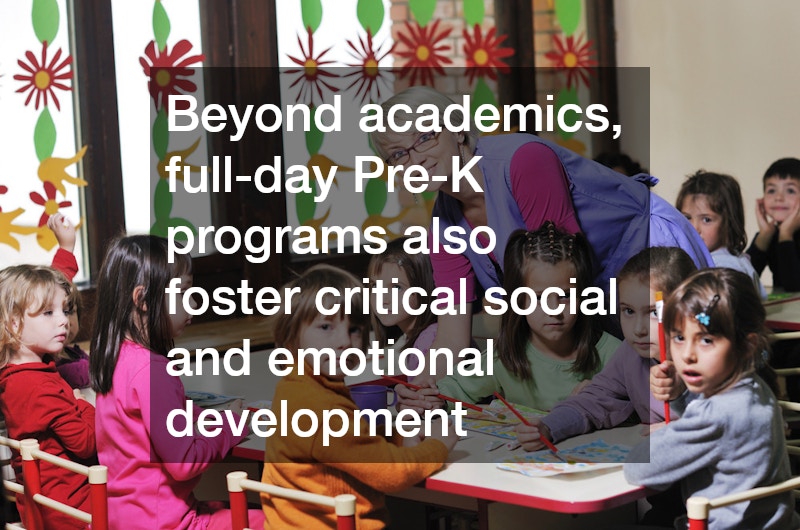
Beyond academics, full-day Pre-K programs also foster critical social and emotional development. Through consistent interaction with peers and educators, children learn valuable social skills like sharing, empathy, and cooperation. These interpersonal experiences are crucial in helping young learners understand and manage their emotions effectively. Many preschool centers emphasize group activities and collaborative projects that encourage children to work together and develop a sense of community. This holistic approach ensures that children not only thrive academically but also grow into well-rounded individuals.
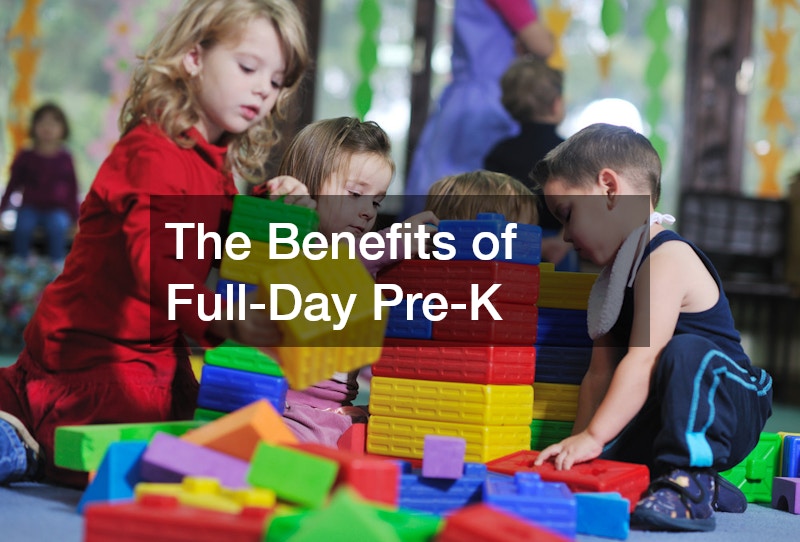
Another critical aspect of full-day Pre-K programs is their role in promoting physical health and development. With ample time allocated for physical activities, children have the opportunity to engage in various forms of exercise, contributing to their motor skills and overall health. Preschool centers often integrate outdoor play, fine motor skill activities, and even simple physical exercises into their daily routines. This increased emphasis on physical development supports children’s wellbeing, ensuring they grow strong and healthy. Ultimately, this aspect of full-day programs complements the cognitive and emotional benefits, resulting in a comprehensive developmental experience.
The Role of Preschool Centers
Preschool centers are pivotal in the successful delivery of full-day Pre-K programs, as they provide the necessary resources, facilities, and trained educators. These centers often have specialized curricula designed to cater to the specific needs and developmental stages of young children. By maintaining a low student-to-teacher ratio, preschool centers ensure each child receives individualized attention, reinforcing learning outcomes. Additionally, many centers leverage innovative teaching methods and technology to enhance the educational experience. This commitment to quality education makes preschool centers an essential component in the success of full-day Pre-K.
The infrastructure and supportive environment offered by preschool centers play a crucial role in promoting a child-friendly atmosphere. Classrooms are typically equipped with age-appropriate learning materials, ensuring a safe and engaging setting for young learners. The design of these centers often prioritizes safety and accessibility, providing children with the freedom to explore and learn autonomously. With well-furnished play areas, rest zones, and diverse educational resources, preschool centers create an ideal environment for full-day learning. This enables students to thrive intellectually and socially within a nurturing setting.
Collaboration between preschool centers and families is another critical element in supporting children’s development in full-day Pre-K programs. By maintaining open lines of communication with parents, these centers can provide better-tailored educational experiences. Many centers organize regular meetings and workshops, ensuring parents are actively involved in their child’s education journey. This partnership builds a strong sense of community, helping children feel more secure and supported. Consequently, the role of preschool centers extends beyond just education; they become a foundational element in a child’s overall growth and development.
In conclusion, full-day Pre-K programs offer a multitude of benefits that extend well beyond the classroom. These programs provide young learners with a robust foundation in both academic and social skills, preparing them for future educational success. By addressing various developmental needs holistically, full-day Pre-K promotes well-rounded growth in children. The contribution of preschool centers is invaluable in this process, offering tailored educational experiences and cultivating a supportive learning environment. Hence, full-day Pre-K represents a significant investment in a child’s future, fostering lifelong learning and development.
As the popularity of full-day Pre-K programs continues to rise, it is essential to acknowledge their profound impact on both children and their families. In a world where early education is increasingly recognized as vital, these programs fill the gap by providing quality learning experiences during crucial developmental years. The role of preschool centers in facilitating these programs not only benefits individual learners but also strengthens communities. With ongoing support and adaptations to these educational models, full-day Pre-K can continue to evolve, addressing the changing needs of society. This ongoing commitment ensures that children are equipped to navigate their educational journeys confidently.
Ultimately, the benefits of full-day Pre-K extend far beyond the classroom, influencing not only children’s academic trajectories but also their emotional and social well-being. By nurturing a love for learning, these programs lay the groundwork for a life of inquiry and exploration. For parents, the assurance that their children are in a safe, enriching environment provides peace of mind. Full-day Pre-K is more than just an educational choice; it is a community investment that enhances the overall fabric of society. By supporting the growth of such programs, communities take a proactive step toward building a brighter future for generations to come.