
Certified Nursing Assistant (CNA) programs offer foundational training for individuals aspiring to enter the healthcare field. These programs are designed to equip students with essential skills and knowledge required to provide basic patient care under the supervision of registered nurses. Prospective students often choose a CNA program as it is a quicker pathway to entering the nursing workforce compared to other nursing programs.
CNA programs typically run over a course of 4 to 12 weeks, depending on the curriculum and institution offering the program. During this period, students are immersed in both theoretical lessons and practical clinical experiences.
This combined approach ensures that graduates are well-prepared for the diverse scenarios they will encounter in real-world healthcare settings.
Upon completion, students are required to pass a state competency exam to become certified. This certification is essential, as it validates their skills and knowledge, making them eligible to work in various healthcare environments. For many, enrolling in a CNA program is the first step towards a rewarding career in the medical field.
The Curriculum of a CNA Program
A typical CNA program includes a comprehensive curriculum that covers a range of subjects essential for patient care. Key areas of study often include anatomy, physiology, nutrition, and infection control. Understanding these concepts is crucial as CNAs are responsible for monitoring and reporting any changes in a patient’s condition.
In addition to theoretical instruction, CNA programs emphasize hands-on training. Students can expect to learn and practice skills such as taking vital signs, assisting with daily living activities, and performing CPR. These practical competencies are critical for ensuring patient safety and improving the quality of care delivered by CNAs.
Communication skills are also a vital component of the CNA curriculum. Effective communication with patients, families, and healthcare team members is fundamental to the role of a CNA. Through interactive exercises, students learn to build rapport with patients and convey important information clearly and compassionately.
CNA Program Clinical Experience
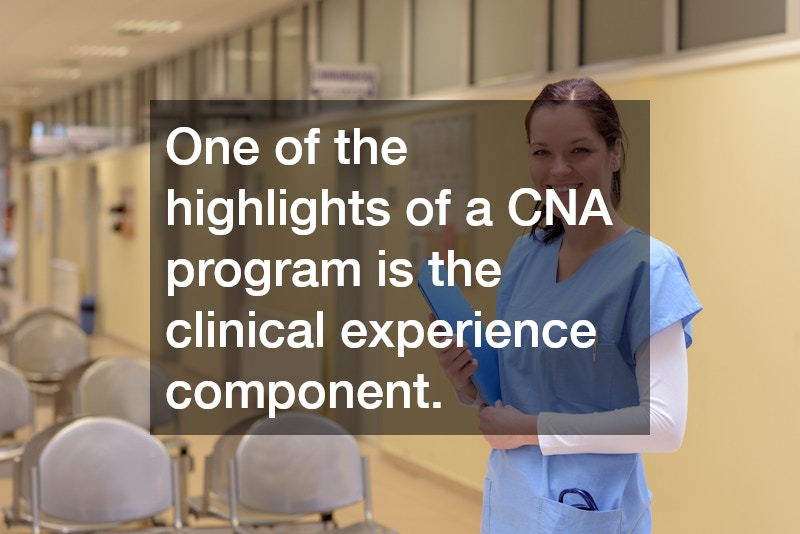
One of the highlights of a CNA program is the clinical experience component. This practical training allows students to apply their classroom knowledge in real healthcare settings, such as hospitals or nursing homes. Under the supervision of experienced healthcare professionals, students gain hands-on experience in patient care, which boosts their confidence and competence.
During clinical rotations, students get the opportunity to interact directly with patients, perform tasks like feeding and grooming, and observe healthcare protocols firsthand. These experiences are invaluable as they help students understand the realities of working in the healthcare industry. The interaction with patients also enhances their ability to empathize and provide quality care.
The clinical training component also provides insight into various healthcare career pathways. Students often find inspiration and direction for future specialties by observing different departments and healthcare roles. This exposure can ignite a passion for further advancing their career in nursing or other healthcare fields.
Career Opportunities After Completing a CNA Program
Graduates of a CNA program have a variety of employment opportunities available to them. Many CNAs work in hospitals, where they form an essential part of the patient care team. They may also find employment in nursing homes, long-term care facilities, and home healthcare services.
The demand for CNAs is steadily increasing, making it a promising career choice for those entering the healthcare field. As the population ages, there is a growing need for dedicated professionals to provide compassionate and skilled care to elderly and rehabilitative patients. This trend is expected to continue, providing job security and potential for growth in various healthcare settings.
Moreover, becoming a CNA is often viewed as a stepping stone to further education and advancement within nursing. Many CNAs use their experience as a foundation to pursue higher degrees, such as becoming a registered nurse (RN) or obtaining a specialization. The skills learned during a CNA program not only provide immediate employment opportunities but also serve as a valuable foundation for future career advancements.
In summary, a CNA program offers a comprehensive blend of theoretical and practical training, preparing students for a fulfilling career in healthcare. These programs provide an entry-level pathway into the nursing profession and are crucial for meeting the growing demand for skilled healthcare workers. With dedication and passion, graduates of a CNA program can look forward to a rewarding and impactful career.
Whether starting a career or building a foundation for further education, a CNA program opens doors to numerous opportunities in the medical field. The knowledge and skills acquired through these programs are integral in providing quality patient care and improving the overall healthcare experience. For those considering a career in healthcare, enrolling in a CNA program is a step in the right direction.
Employers value the practical experience and knowledge that CNA program graduates bring to their teams, emphasizing the program’s role in shaping competent healthcare providers. As the healthcare industry continues to evolve, CNAs will play a pivotal role in delivering high-quality patient care. Therefore, pursuing a CNA program is not just a career choice, but a commitment to making a difference in people’s lives.